If you have recently found or inherited a physical coin featuring a ₿ symbol, you may be holding what’s called a
Casascius coin (or Casascius physical Bitcoin). Here is what these coins typically look like:
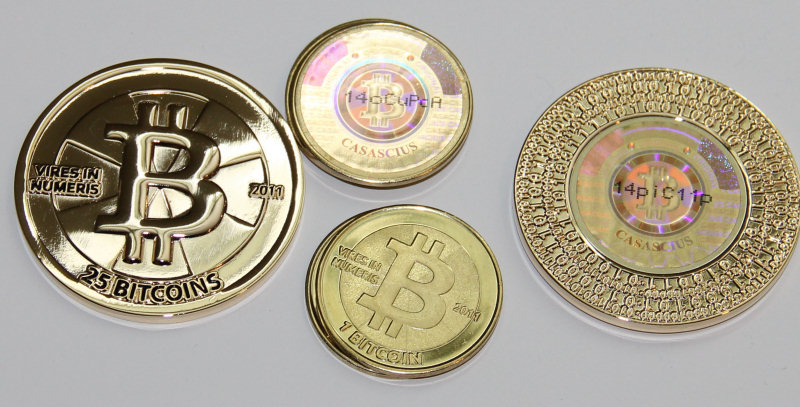
These coins were created by Mike Caldwell in the early 2010s as a physical collectible of a digital currency named Bitcoin. Because the production of these physical coins stopped in 2013, they have become highly sought-after relics of Bitcoin’s early history.
However, there is something you must understand immediately: the value of your coin may be significantly higher than it appears. To someone unfamiliar with Bitcoin, it might look like a simple brass, silver, or gold token. In reality, these coins were loaded with digital funds that have massively increased in value over the last decade. A single coin that originally cost a few tens or hundreds of dollars could now be worth millions of dollars.
If you have come across one of these coins, this tutorial will explain how to assess its worth and, more importantly, how to handle it properly so you don’t accidentally lose the fortune it might hold.
First of all, what is Bitcoin?
Bitcoin is a currency, like the US dollar or the Euro. That is, it can be used to buy or sell goods and it can be exchanged for other currencies. Bitcoin does have a few key differences that set it apart from traditional currencies, but for the purpose of this article, you don’t need to understand all of them. However, you should know that:
- Bitcoin is primarily a digital currency. You need to be comfortable with technology.
- Bitcoin is decentralized. That is, it works without central authorities such as governments, banks or payment platforms. If anything goes wrong, you are on your own.
- Bitcoin transactions are final. Reversals or chargebacks are impossible.
What are Casascius coins and how do they work?
While Bitcoin is a digital currency, Casascius coins give it a physical form. They contain a hidden, embedded piece of
paper printed with a private key, which is like a password: whoever possesses it has full control over the associated
Bitcoins and can spend or transfer them at will. The private key format used by Casascius starts with S and should look
something like SpoF2XbtiJimneNbDLiF4KDvHqXH3Y or S1KGWAbEbA5Ljx9qGTZzct.
To keep this secret safe, the private key is tucked inside the coin and covered by a tamper-evident hologram. This seal must be physically peeled away to reveal the private key. Once this is done, a honeycomb pattern will appear on the coin, informing its owner that the private key has been exposed and that the funds are now likely gone.
Are Casascius coins worth anything?
Casascius coins were issued in denominations of 0.1, 0.5, 1, 5, 10, 25, 100, and 1,000 BTC. Though worth little at production, their value has since skyrocketed; at the time of writing, the 0.1 BTC denomination alone is worth approximately $7,775 USD. Because of this, you must treat any Casascius coin you find as a high-value financial asset, much like you would a piece of jewelry or a stack of cash.
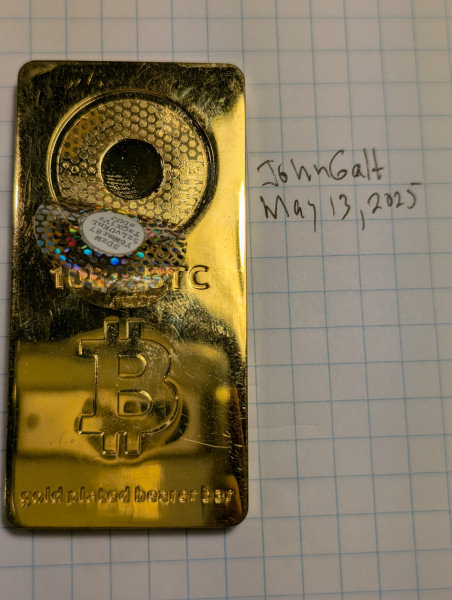
It is worth noting that Mike Caldwell also issued physical bars in larger denominations of 100, 500, and 1,000 BTC. While these bars are significantly rarer than the coins, they function in exactly the same way: the digital value is secured by a private key tucked behind a tamper-evident hologram. Although I will refer to “coins” throughout the remainder of this tutorial, keep in mind that every step for verifying and handling them applies equally to these bars. Here’s what a redeemed bar looks like:
How do I know if my Casascius coin still has Bitcoins?
On one side of your Casascius coin, you will find a holographic sticker. You should see a string of eight characters
consisting of letters and numbers that begins with the digit 1. This sequence identifies the coin by displaying the
first eight characters of the Bitcoin address linked to it.
Because the Bitcoin network is a public ledger, anyone can use these eight characters to look up the status of the coin online. You do not need to peel the sticker to do this, and searching for this address is completely safe: it does not reveal the private key or put the funds at risk. It simply allows you to see if the Bitcoins are still loaded on the coin.
The next step is to confirm whether your Casascius coin still holds its Bitcoins. To do this, we will use a specialized
tool called the Casascius Bitcoin Analyzer. On the analyzer’s homepage, enter the
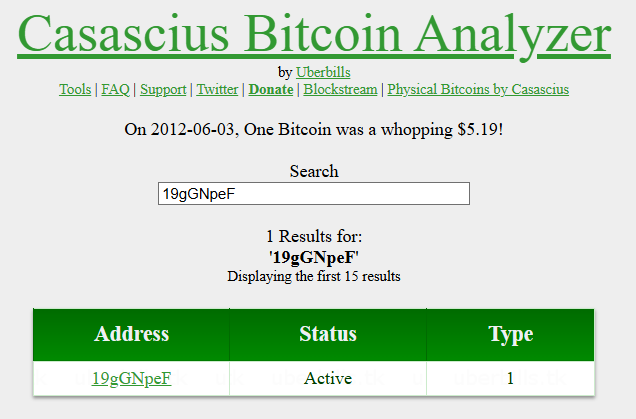
8-character string found on your coin into the search bar and press ENTER. For this example, I will use the string 19gGNpeF.
In most cases, it is unique enough that only a single result will match your specific coin, like so:
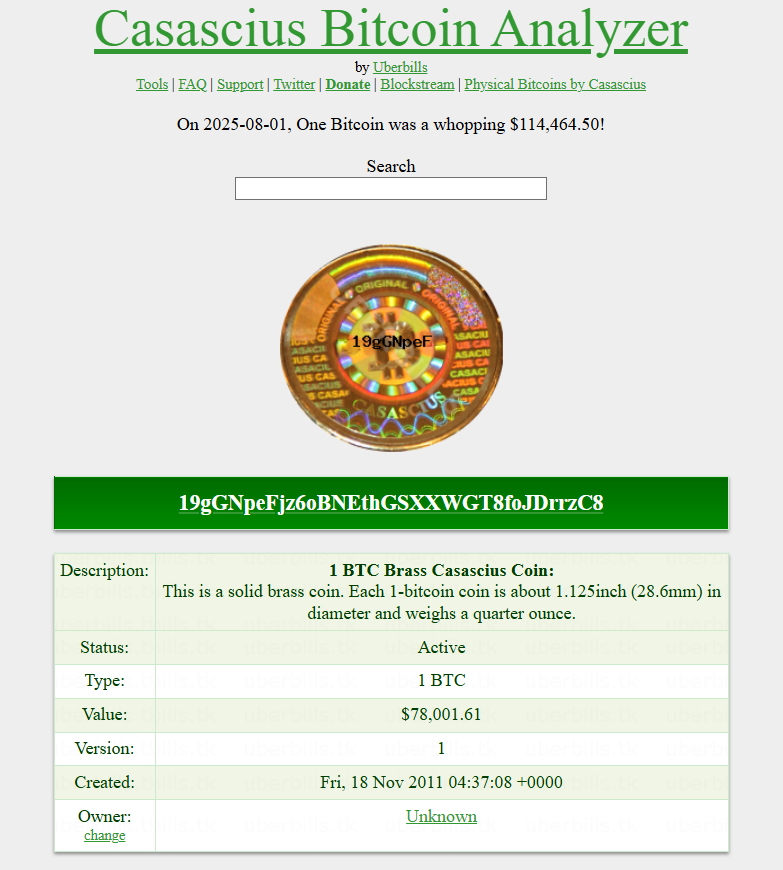
After clicking the link in the results table, the tool will display a breakdown of your coin, as seen in the screenshot
below. Take a moment to double-check that the information displayed on the website matches the physical coin you are
holding. If the details align, you can then click the revealed Bitcoin address. In our example, that address is
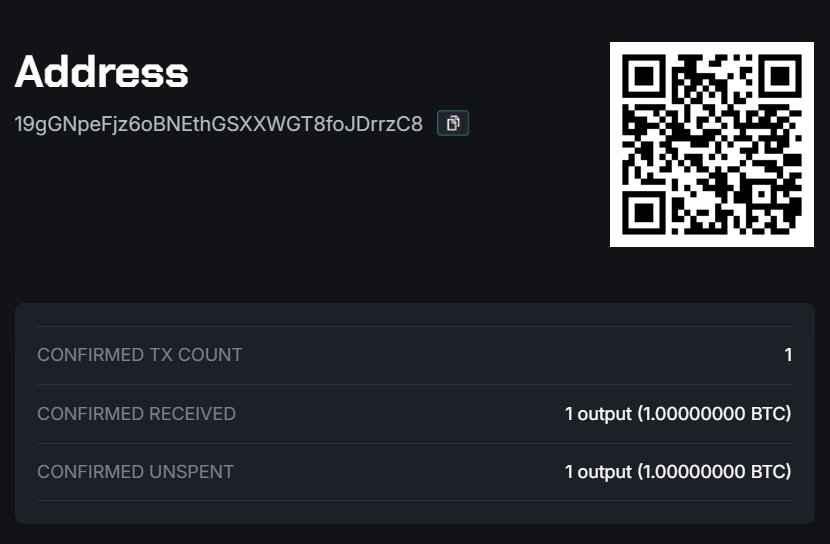
19gGNpeFjz6oBNEthGSXXWGT8foJDrrzC8.
Clicking the link will redirect you to what we call a blockchain explorer. This tool provides a real-time view of the status of your coin and allows you to confirm whether the digital funds are still there. At the time of writing, our example address still holds a balance of 1 BTC, which is clearly displayed in the Confirmed unspent line:
What should I do with my Casascius coin?
Your next steps will depend on whether your Casascius coin still holds its digital value.
My Casascius coin is empty; is it worthless?
While this is a disappointing outcome, the physical coin itself is not worthless. Because Casascius coins are considered iconic artifacts of Bitcoin’s early history, a market exists for them. Many collectors are eager to purchase redeemed coins simply to own a piece of digital currency history. While the proceeds likely won’t fund your retirement, these coins generally sell for a respectable premium over the value of the metal they are made of.
My Casascius coin is loaded; how do I redeem the funds?
Redeeming a Casascius coin involves moving the funds from the physical coin to a digital wallet, a hardware device, a cryptocurrency exchange, or a long-term storage solution like a seed plate. This process also involves claiming various “forks” – separate cryptocurrencies like Bitcoin Cash that were created throughout Bitcoin’s history – which might be valuable on their own.
However, I must be very direct about the stakes: even a low-denomination coin (such as 0.1 BTC) represents a sizable sum of money. At these price points, providing a generic “how-to” guide feels nearly irresponsible. Bitcoin transactions are permanent; a single typo, a compromised laptop, or a minor technical misstep could result in the total and irreversible loss of your fortune.
Furthermore, the “correct” way to redeem your Bitcoins depends entirely on your goals. Do you want to sell them for cash immediately? Do you want to hold them for another ten years? Or perhaps a mix of both? Each path requires a different approach to ensure the maximum level of security.
My professional redemption & security services
Given the technical minefield and the life-changing sums often involved, I offer a professional service to handle the heavy lifting of redeeming your Casascius coin. Navigating this process alone is risky; my objective is to ensure your assets are moved with zero exposure to technical errors or security breaches.
Beyond the technical migration of your Bitcoins, I also help you navigate the strategic side of the redemption. Whether you want to liquidate your Bitcoins for cash immediately or secure them for the next decade, I will help you evaluate the best path based on your goals.
I charge a 5% fee on the redeemed coins. I do not charge any upfront, flat, or hourly fees; my business model is entirely commission-based.
Frequently asked questions
If I find a Casascius coin, does it legally belong to me?
No. Simply finding a Casascius coin does not grant ownership. Legal implications vary depending on how and where you discovered it, so it’s best to consult a legal specialist.
If I sell my Bitcoins, will I have to pay taxes on the proceeds?
In all likelihood, yes. However, the tax implications vary depending on your jurisdiction, so it’s best to consult a financial specialist.